Our AI Practices

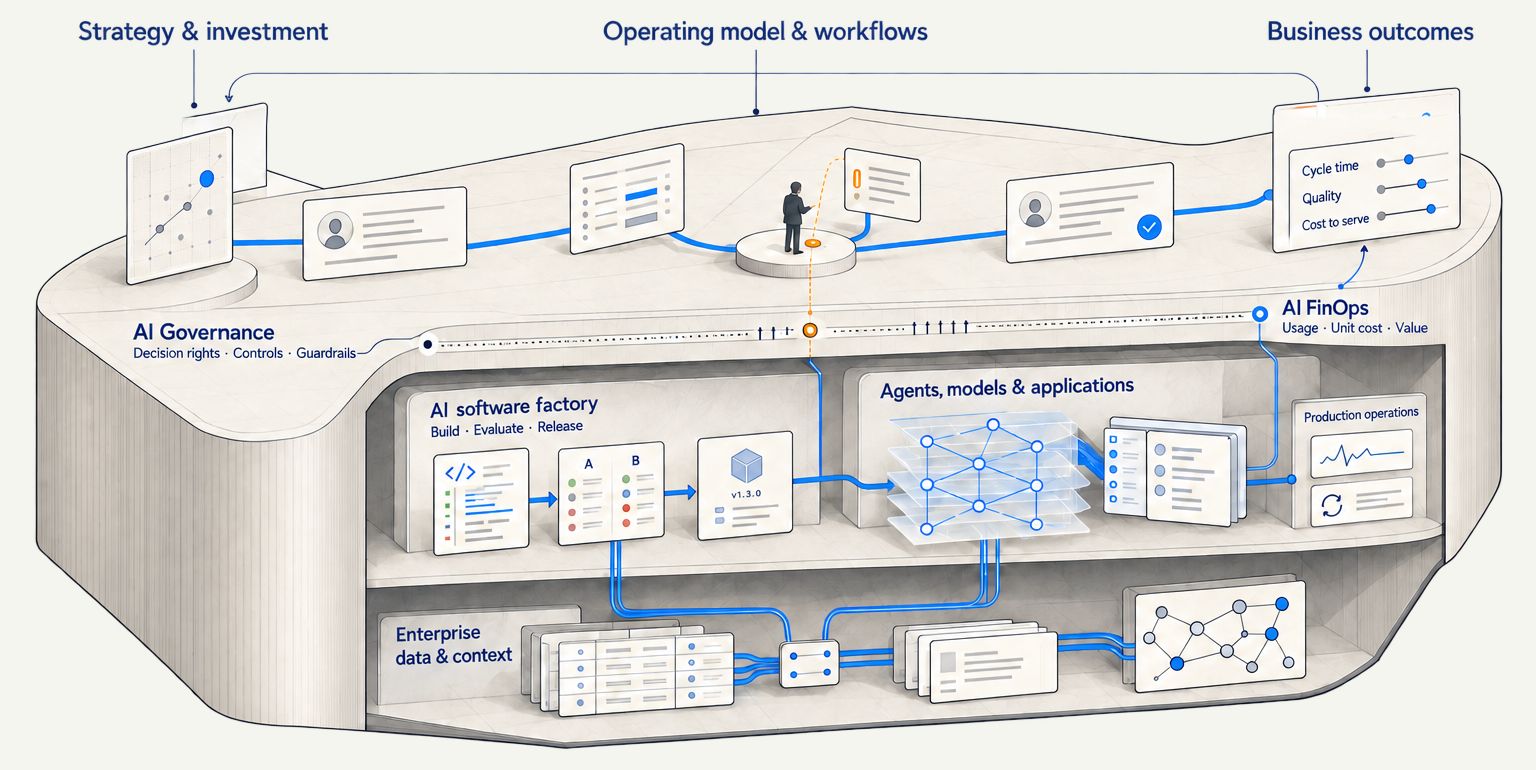
Strategy, engineering, governance, and enablement: working together to turn AI investment into business results.

AI Strategy and Transformation

Decide where AI creates value and redesign the work to deliver it.

Explore AI Strategy and Transformation

Strategy and Transformation shapes the future work and its value case. Engineering builds the systems. Governance defines and checks the controls. Enablement helps people put the changes into practice. The four practices work together across Target, Build, and Scale.

What Sponsors Ask Before They Fund the Work

Do we need to start with a Bootcamp?

Not always. A Bootcamp helps leaders and teams build a shared understanding of AI. If you already have that foundation, start with the decision or delivery problem in front of you. An opportunity may need blueprinting; a system already being built may need engineering. Program Studio helps you choose a starting point.

Explore the AI Bootcamp
Which AI use cases could pay back within a year?

Compare opportunities using transaction volumes, current effort, achievable improvement, adoption assumptions, and total delivery and operating cost. Prioritize a small portfolio with a credible route to value and explicit go or no-go milestones. A one-year payback is a hypothesis to test, not a promise.

Explore AI strategy
How do we move beyond proofs of concept and scale AI?

Give the workflow a business owner, a production owner, and acceptance criteria. Build the integrations, evaluations, release process, monitoring, fallback, and user adoption needed for real operation. Expand only when the system meets agreed quality, cost, and operating thresholds; a working demo alone is not that evidence.

Explore Productization
How do privacy, security, and ethical guardrails become part of delivery?

Define data boundaries, access controls, evaluation criteria, human review, and escalation paths before release. Test for the risks relevant to the workflow, retain appropriate decision records, and review controls as models and usage change. Your security, legal, and business owners help determine what is acceptable.

Explore AI Governance
How is value measured, and what does AI cost in full?

Establish the baseline before delivery: cycle time, cost to serve, quality, revenue contribution, or another relevant outcome. Track adoption and total cost: delivery fees, model usage, integration, human review, support, change management, and your own people’s time. Separate projected value from realized results, and use a comparison group or phased rollout where practical to test attribution.

Explore AI FinOps
How do we avoid hype, lock-in, and obsolescence?

Choose technology against your requirements and test it on representative work. Compare quality, cost, security, integration effort, and portability. Keep evaluation assets, data access, and business logic under your control where practical; document switching costs and trade-offs. No architecture eliminates lock-in or future change.

Explore AI Solution Blueprinting